
Tim Thompson - Archer English Consulting
  • Home
  • Bio
  • Clients
  • Workshops
  • Publications
  • Tim's Blog

Does Participation Constitute a Portion of Your Course’s Grade?

2/13/2019

0 Comments

 
Picture
When I first started teaching university-level English courses in South Korea in 1997, the syllabus was given to me by the department and grading elements included attendance, participation, a midterm exam, and final exam.  Later, I was able to design my own courses but I always kept a small percentage of the overall grade for participation.  Why did I do that and would I still include participation as part of the course grade if I were to design a new course now? Answers to follow...
 
Why Did I Include Participation?

When I reflect back on my attitudes toward assessment early on in my career, I wanted the grade to include elements of both effort and ability.  I am a strong proponent of students feeling like their grades were earned, not given.  Thus, the grade would include criteria such as attending the classes, bringing the textbook and a writing instrument, utilizing my office hours, and participation during in-class activities to represent effort-based criteria. Exams, quizzes, writing assignments, group and solo projects, and any other productive output would be used to determine each student’s language ability or aptitude in the skill that is being taught through the second language such as essay writing or how to give a presentation. 

{I sincerely apologize in advance for the next two paragraphs.}
I am not including growth as a factor because it requires accurate pre-testing to determine each student’s level of familiarity with the course’s content as a starting point for the semester.  When schools implement pre-course ability testing to attempt to create a level playing field for the students in the course or in the sections across the course, a new can of worms is opened.  In theory, the students would now enter the course without having to compete with other students who have
 vastly different ability levels.  The first potential problem is that this could only be achieved if prospective students who show proficiency in what the course aimed to teach are able to test out of the course while others who are not adequately prepared for the course would be required to take a remedial course first and this is not always the case.  Another issue is that if course is divided into different sections and the students are grouped by ability level, the course should not be listed in the same way for higher level sections and lower level sections.  Otherwise, a student who earns an A in a lower section of Course 101 would appear to be more impressive to a graduate school or potential employer than a student earning a B in a higher section of Course 101.  This can lead to students purposely tanking the entrance exam to get into a lower level section in the hopes of getting an easy A.

It should also be noted that I am assuming that the department does not have a mandatory grade curve in place.  I am against curves because I don’t believe that grades should be based on intra-class competition but on meeting or surpassing the instructor’s expectations for what should be learned and experienced during the semester. I realize that the fear of grade inflation and instructors “giving” too many As in order to garner higher evaluations are reasons given for implementing grade curves but I feel that if the right educators are hired and departments do not put too much weight on student feedback, there is very little to actually fear.

So, to get back to answering this section’s question, I included participation factors in my course’s grading criteria because I wanted all of the students in the course to be able to earn an A and I wanted both ability and effort to play a role.
 
Would I Include a Participation Element Again?

The simple answer is yes.  However, I am assuming that the course in question is not lecture based and would have opportunities for the students to actually develop skills instead of only studying theory.  If I was asked to teach a large, theory-based course that had out-of-class readings and then a lecture element, the grading would lean on traditional assessment criteria like multiple choice tests to determine if the students were absorbing the content.  This would be appropriate for courses that have a large number of students and little to no productive requirements.  In a course like that, I might not even choose to track attendance and use it as a grading criteria.  They are university students after all and don’t have to be there.  If a student can do the readings and pass the tests by borrowing lecture notes or attending study groups then good for them.
 
How Much of the Grade Should Be Designated for Participation?

In the original syllabus that I mentioned at the beginning of the article, 10% was allocated to participation.  I kept this over the years and deducted points each time a student was not prepared for class or did not participate at a satisfactory level (following a warning).  I believe 10% is reasonable because it constitutes one full letter grade in a traditional 100-point scale.  Students who work hard to meet the teacher’s expectations will get full participation points and their final grade will come down to how well they do on the tests and activities in the course.  Students whose poor choices result in losing participation points will have a harder time earning a higher grade.
 
Conclusion

Grading and assessment are complicated issues and sources of great debate among educators.  When I began teaching, I didn’t question the syllabus that was given to me and the students didn’t complain about the grading elements, just the final grade itself. I have changed a lot as an educator but I still see the value of reserving 10% of the grade for participation.  Change my mind.


0 Comments

Passion > Accuracy

2/12/2019

0 Comments

 
Picture
Yesterday was a fun day. I wrote a blog post about writing for language teaching magazines and it got a lot more attention online that my usual posts do.  One of the best outcomes was a DM on Twitter asking for some advice on how to deal with impromptu business presentations for a student who is around B1 level and lacking confidence.

I had been planning a post on this for a while but after yesterday's "success" and the nudge from the DM, I thought I'd write a little bit about it here.  Passion can easily make up for a lack of accuracy in a second (or third, or fourth) language. I've seen it happen time and time again.  That being said, I've also seen a lack of accuracy kill the passion that I know is there but the speaker is afraid to show it.

I'll give you three examples.  The first one comes from the IELTS exam.  If you've never taken the IELTS exam or a prep course for it, it's not like those multiple choice exams or online "talk to a screen" exams that claim to be able to determine a candidate's language ability.  For the speaking portion of the IELTS exam you sit in a room with the examiner and basically have a conversation for 11-14 minutes.  Some parts of the exam are scripted but the examiner has some flexibility for where they can take the conversation.  Scoring is spread across the candidate's lexical resources, grammatical accuracy, pronunciation, and fluency & coherence.  Scores for each criteria are 0-9.  When you look at the descriptors for each band there is a quite a bit of wiggle room.  Sometimes the difference between a six and a seven for one criteria is a "feel thing".  This is where attitude/passion/personality/enthusiasm/energy level comes into play.  A candidate's attitude won't change their grammar mistakes but it can shape the way we hear them speak.  The examiner may feel like the score for vocabulary usage, pronunciation, and fluency could go either way and if we actually enjoyed talking with the candidate we will probably skew up.  I know this has happened to me in the past. "Six?  Seven?  Six?  Nah, they were really confident... Seven!"

A second example comes from the presentation skills classes I taught in the EFL department of a university in Korea. Listening to ten or more presentations in a row can be tedious.  Students who began their presentation with a strong voice and a smile on their face changed the dynamic of the entire room.  I would often glance around at the beginning of each presentation to see if the other students were paying attention.  If the speaker began with a weak, flat voice, many of the students would put their head down and study their notes for their own presentation.  Conversely, a strong voice provoked the others to pay attention.  It was almost as if the other students knew they could learn a thing or two from this speaker.  When giving post-presentation feedback, I regularly pointed out how impressive the speaker's energy level was and how it helped me give the speaker my full attention.  Most of the students nodded in agreement but it wasn't always easy for them to emulate.

This leads us to the third example, conference speakers.  Like in my class, many speakers at ELT conferences are non-native.  Many of them confess that it can be intimidating to give a presentation to their colleagues, especially if there are native speakers attending the talk.  I suppose it's human nature to assume you are being judged when giving a conference presentation. I'll confess, in my case you are being judged, just not the way you think.  I can't help it.  I judge every speaker's presentation skills.  I judged Jane Goodall when she came to give a talk about her years in the mountains with the chimpanzees.  I judge big name speakers who come to conferences and give the same uninspired talk they gave a week ago in a different city. And I just the language school teacher who is giving their first presentation at a conference and is scared to death.  The thing is, I'm not judging their English unless it is so bad that I can't understand what they are talking about, and that almost never happens.  So speak with confidence.  Believe in your message, believe in your content, and believe in yourself.

There's something special about a speaker who seems genuinely happy to be there.  They know they have an accent (which is not a bad thing), make occasional grammatical errors, and say the wrong word from time to time but they are there to share something of value and that's what they focus on.  You can see the joy on their face and if you look around you will see that joy reflected in the faces of the audience members. So, I'll end with the same advice I gave in my reply to the DM on Twitter. 
"Accuracy takes time to develop. Sometimes it never develops to where we want it to be, but energy and enthusiasm can make up for that. If she brings passion to the presentation, it can often overcome the inaccuracies. If she appears to lack confidence AND makes a lot of grammatical errors, it wouldn't be surprising for the client to say no. Have her practice timed answers for surprise topics that require her to share her opinions.  Praise her for passionate answers. That should help in the short term."


0 Comments

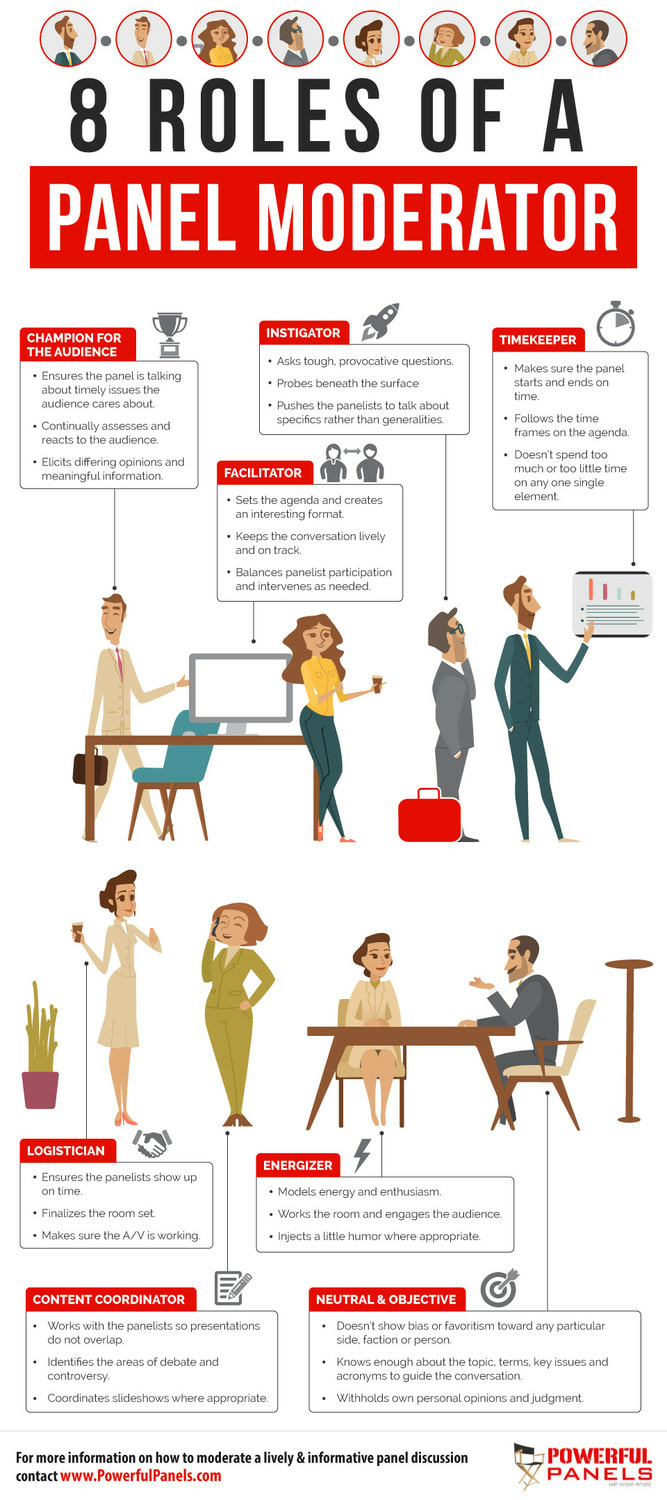
How to Write Articles for Language Teaching Magazines

2/11/2019

0 Comments

 
Writing articles for magazines that focus on language teaching can be great for your teaching career.  It boosts your CV, enhances your name recognition which will generate opportunities at professional development events and conferences, and best of all it helps other teachers.  So what do you need to do to get your article published in a language teaching magazine?
 

1. Choose a magazine and study it
The first thing to do is select the publication you are interested in writing for.  What kinds of articles do they publish?  How long are they?  How are the articles laid out?  Are they more academic and research based or are they more about sharing thoughts and classroom experiences?  Do most of the articles have a long list of references?   Make sure your topic is something that fits within the magazine's scope and isn't repeating something that was published recently, t
hen read the submission guidelines carefully.
This is a tip I give to anyone writing for publication, whether it is a letter to the editor in a local newspaper or a scientific journal article: Make sure your manuscript looks like articles that have been successfully published.  This means the length, the tone, the format, and even style choices like serial commas and British/US spelling.  If the format doesn’t match the editor’s expectation, it’s probably going to be rejected unless the content is so good that is makes up for it.  Even then, the editor is likely to ask for revisions.
 

2. Write for a target reader
Think about who will be attracted by your title and read your article.  Does the title accurately portray the benefits your article is offering?  Your reader will most likely be a less experienced teacher or a teacher who is interested in new ideas for their classes.  Focus on sharing what worked for you and make sure you clearly lay out what the reader will need to do to duplicate your success in their classes.  Explain your teaching situation so the reader can determine if they will need to make any adjustments to implement your ideas. 
 

3. Outline your ideas
It is very hard for me to start writing without planning what I want to say.  I need to outline my thoughts on paper (yes, actual paper) and make sure I have a clear plan for what I want to share and enough content to make it worthwhile.  I try to assemble my main points or tips as bullet points and find a way to make them flow together.  Writing from an outline also allows me to focus my concentration on clearly explaining my ideas for each subsection instead of being distraction by trying to make sure the whole article is tied together while I’m writing. 
 

4. Take your time
It is important not to rush and fire off your first draft.  Put it away and look at it again after a day or two (or seven).  Try to absorb the article with fresh eyes and imagine that you are someone who is trying to learn from it.  What might not be clear to someone who is new to your topic?  What could explained more succinctly?  Is your tone consistent?  Ask a colleague to look it over and give feedback.  Hopefully they will also catch your typos. Thanks, Michael F.
 

5. Send the article with a short email
I usually keep my submission emails short.  In fact, they are rarely more than three sentences but the one I never leave out is the one that explains how I feel the article can benefit the magazine’s readers.  I find that this helps the editor approach the article with a more positive attitude.  This has been the case for me both as a writer and an editor.
 
It feels great to see something you wrote in print or published on a popular website.  I have had good luck with magazines like English Teaching Professional, Modern English Teacher, EFL Magazine, and KOTESOL’s The English Connection.  Regular publications are always looking for new content so if you have a creative idea to share with your fellow educators, follow these tips and you should see your article in print in no time.
0 Comments

When Doubt Creeps In

1/31/2019

1 Comment

 
There are a lot of words that describe freelancing: satisfying, terrifying, liberating, and lonely, but steady is not one of them.  January (and February for that matter) are slow months for me.  This is my fourth year as a freelance communications consultant in Korea and January 2019 was easily the worst month ever.  

There were no late payments coming in for work in December (but thanks for paying on time), there were only a few editing jobs (better than none), none of my clients wanted training in January (but I'm lining up some training in March), and there are very few big projects on the horizon.  Sure, this has happened before and then I get three calls and four emails in a day and I'm running around like crazy but during the dry periods doubt starts to creep in.  What if nobody calls?  What if they found someone else to work with?  Do I need to start looking for a full-time job?

Samira Shackle put out a great thread on Twitter about freelancing that really struck me.  She talked about the need for a financial cushion (YES!) and some great ideas for how and where to look for more work.  I've said it before and I'll say it again here, I don't like to commit to long gigs.  As soon as I do that, I miss out on something more lucrative or more interesting.  So I turn down opportunities that would help pay the bills but would also tie me down.

Type "betting on yourself" into Google and you will see that it is a popular idea that many people espouse.  It turns into a mantra for me during the slow winter months as I remind myself how busy some of the other months have been and hopefully will be.  Freelancing for the last three years has been amazing and has the potential to be rewarding both professionally and financially but I still send out my CV when a full-time position looks like an opportunity to learn, grow, and help while reducing some of the financial uncertainty that comes with freelancing.  Stay tuned to see what happens in 2019.  I'm curious too.
1 Comment

Where Do Opportunities Come From?

1/20/2019

0 Comments

 
It's January, so it's a very slow time for freelancers like me.  Two years ago, I wrote my book in January.  This year I took a trip with my family, binge watched TV shows like You and Killing Eve, and got hooked on Wordscapes.  As destructive as a slow month is on my bank balance, it's a great time to relax and recharge, plan ahead, and reflect on what got you where you are.  In my case, I've been thinking a lot about some of the amazing professional opportunities that I have had and where they came from. I hope they will inspire you to pursue some new opportunities if you feel like you are stuck in a professional rut (which we all do from time to time).

Here are five areas where my professional opportunities have come from:

1. Networks
There is no doubt that most of my clients have come from being introduced by friends and colleagues.  The strangest example of this would be a former student introducing me to her mother, who ended up working with me for several years and hiring my company to work with her research lab during the Olympics last year.

2. Volunteering
Sometimes you hear about an opportunity that sounds interesting but, unsurprisingly, the client wants someone with a lot of experience.  Volunteering gives you experience you might not have been totally qualified for but now you have the confidence that comes with having actually done something (not just reading about the theory from a textbook) and you have results that you can point to.  In my case, I served as the editor-in-chief for a magazine and this helped convince several current clients that I was qualified to work on their publications.

3. Asking for chances
Anyone who knows me knows that I am not shy about asking for an opportunity.  I believe in what I do and that's why I am not ashamed to reach out to people I know or to new people through friends in my network.  In March, I will be going to Turkey for the third time to give some talks.  This all came about from a friend in Japan recommending me to someone she knew in Istanbul and my network growing from there.  

4. Being available
Leaving a full-time job at a university was hard.  It's not easy to give up a monthly paycheck.  But aside from not having to ask permission to do outside work, one of the best things about working as a freelancer is being available when other people are tied up.  I might be the tenth person a client calls but if I'm the only one available then I'm getting the gig.

5. Looking where others don't
There are lots of places that people post jobs and short-term opportunities these days.  Some of them are public sites that anyone can access and others are in closed forums and groups.  Sure, you have to filter out a lot of jobs that don't match your criteria but if you see an ad that your competition doesn't, you have a much better chance of landing it.

What you might have been expecting to see on this list but didn't is advertising.  I don't advertise for two main reasons.  First, its hard to reach my target market because I perform a variety of services and work with people in different countries.  It's not easy finding a place where enough of them would look to justify the cost.  But second, and more importantly, advertising is like a cold call and I prefer to work with people who either know my value or have heard about what I can do from someone they trust.  Most of the people that have found me online through a Google search just want a quote for my services and then never respond again.  This is a huge waste of time.  I'll stick to the best kind of advertising for my business, word of mouth.  It's free and the opportunities that come from it only serve to strengthen my network as I get a new client and the people who recommended get more credibility for recommending a good freelancer.

0 Comments

Know Thyself

8/16/2018

0 Comments

 
Today, I was reading about Cesar Millan (The Dog Whisperer) in Malcolm Gladwell's "What the Dog Saw" and how much his body movements impacted his success with dogs.  Gladwell also touched on how some former US presidents were perceived based on their body language while speaking and it got me thinking about good and bad presenters.

​One of the biggest problems that public speakers have is that nobody has told them what they are doing wrong.  By "wrong" I mean distracting, something that prevents the audience from focusing on what the speaker is saying.  Some examples of this include swaying from side to side, looking at the ceiling or floor, turning and talking to the screen for most of the presentation, nervously scratching or rubbing one's hair or face, or unconsciously playing with an object like clicking a pen, jingling the keys in one's pockets, etc.  The first step to helping them improve is making them aware of what they are doing.  This can be done by a very blunt audience member (hopefully someone they know), a presentation skills instructor during a course, or by watching a video of themselves present.  All three situations can lead to feelings of embarrassment at the time, but they can also lead to huge improvements in public speaking.

Really good presenters know themselves.  They know their bad habits, catch themselves doing those things quickly, and stop.  They are aware of their posture and straighten up when they feel themselves slouching.  They are constantly thinking about where they are standing in relation to the audience, the projector screen, the lectern, the microphone, etc.  Good presenters know they can't continue speaking into a fixed-position microphone if they need to turn around and check something on the screen behind them, or they figure out that they can speak into the side of the microphone while glancing over their shoulder.  They know what do with their hands (or more importantly, what NOT to do with their hands). They know the value of eye contact with the audience and make an effort to acknowledge different areas of the room even if it isn't comfortable for them.

How you deliver your message is often more memorable than what you are actually saying.  Think back to the last conference you attended and the talks you sat through.  There is a good chance that your impression of the various speakers is based more on how you perceived their delivery than on what they actually said.  The people we consider to be "good speakers" are usually the ones that are more aware of how they appear to us and make sure that poor body language doesn't interfere with the message they want to communicate.  
0 Comments

"Nobody Taught Us That"

8/4/2018

0 Comments

 
Picture
One of the most common responses I get at the end of a presentation skills workshop is "Wow, nobody taught us that."  In Korean universities I can almost understand why this would be the case.  High school in Korea is focused on getting the highest possible score on a university entrance exam that is multiple choice.  Speaking skills are not highlighted in the high school curriculum as they simply aren't on the test.  That being said, I was very surprised to hear students from European universities say the same thing during an entrepreneurship camp last month.  Yes, they do more group work and self study in Europe but the explicit teaching of public speaking is not as common as I had imagined.

That got me thinking.  Have I been to any country where participants in one of my workshops said, "Sure, we know all that.  We learned it in our presentation skills class."  Nope, not that I can think of.  And yet, there are so many times in life where better speaking skills come into play, from teaching a classroom full of students to arguing a court case to a jury to pitching a new product to a group of potential investors.  Whoa, let's not forget speaking to our peers at professional and academic conferences.  Let's face it, this is an "in demand" skill and one that has been sorely neglected.  I can think of so many examples where asking "What does your audience want/need to know?" instead of "What do I want to tell them?" would have helped the speaker craft a better presentation and earn a more favorable reaction from the audience.


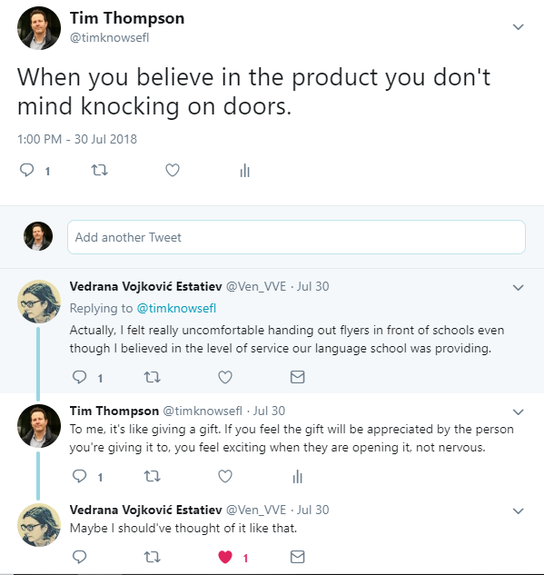
So there are two ways for me to feel about this.  One, I can be frustrated and complain about how schools need to make presentation skills a priority.  (Don't worry, I've done this.)  Or two, I can continue to reach out to schools, government organizations, and private training centers in cities that I visit and offer training workshops.  In the past, I have used Facebook and email to do this but now I'm starting to be more aggressive on LinkedIn and I think it is paying off.  What let to this bold new approach of contacting strangers on a networking website whose premise is that you only contact people you actually know?  I think this Twitter exchange sums it up best.


​

​So if you or someone you know is in Khabarovsk, Vladivostok, Dubai, Muscat, Istanbul, or Antalya, let's discuss setting up a workshop as I'll be in those cities in the somewhat near future.  If you're somewhere else in the world and want to talk about setting up some training, I'd love to cash in some air miles and visit.  Let's replace "Nobody, taught me that." with "I felt more comfortable speaking in front of people now that I know what to do."

​
​

0 Comments

When Tech Fails...

7/31/2018

0 Comments

 
Today I was doing a four-hour teacher training workshop for secondary school English teachers and my tech let me down big time.  This wasn't my first rodeo.  I've taught hundreds, if not thousands, of classes and conducted well over one hundred workshops in a myriad of conditions but today the tech failures still threw me off and left me feeling bad about how things went.

It started with the computer monitor.  It worked at first but fairly quickly it had the floating window telling me that there was no source connected.  No biggie, I thought, just jiggle all the cables in the back.  No joy.  Next, I went back to my training as a computer lab tech, and turned the computer off and back on again.  Still nothing.  Fine, at least the projector was working and I could see what I was doing over my shoulder. Not the best situation but I could make due.

Then something happened that I've never experienced in almost twenty years in the classroom.  The PowerPoint slides started advancing on their own.  Sometimes one click, sometimes more than one.  It was like a ghost had hacked the computer.  It got so bad that I had to take it out of slide show mode and just show the slides next to my slide deck (goodbye slide animations), and it STILL kept advancing on its own.  What a mess...  Needless to say, this was not my strongest training session.  However, upon reflection, I feel like I did my best considering the circumstances. I actually cut my two sessions short and replaced them with activities on the fly.  I tried every fix I could think of while attempting to maintain my rapport with the trainees. I honestly don't know what else I could have done.

Not all presentations and classes will go the way you planned.  They won't all be perfect and sometimes it is simply out of your control; but the more experience you have and the more prepared you are to handle the problems that can arise when using tech for your presentations, the better off you will be.  I just hope for your sake that reading the post will help you anticipate potential problems and you won't have to experience a tech meltdown for yourself to increase your readiness for the next time things go wrong. 
0 Comments

What I Taught About Pitching Last Week

7/24/2018

0 Comments

 
I'm not going to lie, I wasn't very inspired to write up a summary of the main issues that I observed and taught at Bizworld and the Global Entrepreneurship Camp at KAIST over the last few weeks but seeing the feedback from the participants and how much they appreciated learning about the communications side of startups and business lit a fire under me.  So here we go.

I only spent two days with the Bizworld participants so there wasn't a lot of time for one-on-one chats but I was at the camp all day, every day for a full week.  That made it possible to talk during meals and breaks and really hear what the participants were worried about or unsure of.  The number one issue was attitudes when approaching the oral pitches.  Most people (myself included when I was a terrible presenter in university) focus inward and think about what they will mess up instead of focusing on the audience and what the listeners want and need to see and hear. My last post goes into more detail about this.

So, attitude is the first roadblock preventing speakers from being successful.  Now it comes down to common mistakes and stopping yourself from making them.  They include
using words like "cheap" and too many conditional and qualifying words, standing in the projector light and blocking your content, leaving slide numbers off the slides, not having contact info on the last slide, not maintaining enthusiasm from one speaker to the next, not introducing the next speaker properly, not understanding how to manage your time, not persuading your audience due to a lack of eye contact or distracting/weak body language, filling pauses with noise, not figuring out how to use all the tech before you present, and not checking that stylistic elements are consistent across your slide deck. Remember, the objective of a pitch is not only to get the investor to believe that your idea is unique and viable but that you are the right person or team to successfully achieve it.

Between Bizworld, working at the census conference in Vietnam, and co-coordinating the startup camp, I see that even though public speaking skills are not being offered (or maybe "not required" is more accurate) at many schools and companies, there is a strong demand from the people who need them to succeed.  I hope there will be more opportunities in the future for me to help people achieve their goals by training them to speak in front of a group of people where the stakes are high and the environment is very competitive.  Those are the people I find value communications skills training the most and are the most appreciate afterward.  As I tweeted last week, "I think I love teaching presentation skills because one little suggestion can lead to a huge improvement."
0 Comments

Hurricane in the Brain

7/20/2018

0 Comments

 
This week I'm working with students at an entrepreneurship camp.  The week of brainstorming, idea development, and teamwork will culminate in a 7-minute pitch on Friday afternoon. Several participants have noted that when they speak in front of a large group of people they notice that they have trouble remembering what they said and did once it's over.  I call that the hurricane in the brain.  

What causes this inability to recall details or their presentation experience?  I have a theory about this.  Presenting is like juggling and the hurricane occurs when the speaker tries to juggle too many things at once. Think about all the things a public speaker needs to pay attention to: time management, body language, speaking speed and volume, working with technology, and then add presenting in a second or third language (the running chainsaw)!  Add in trying to recite a memorized script in these stressful conditions and the brain can't handle all those things at once.

What can presenters do about this?  One suggestion is to try to work more on understanding what your audience needs to know and then using your slides to help you deliver the content in manageable chunks.  Each slide is its own chapter of your story.  Also, remember that you (should) know more about your topic than your audience and your mission is to inform and/or persuade them. Focus on helping them understand your content. Concentrate on communicating clearly and efficiently with them (focusing outward) and stop thinking about all the mistakes you might make (focusing inward).  Think positively before you start speaking.  The audience wants you to succeed.  Nobody goes to a presentation hoping the presenter will get confused and lose their confidence. 

Better preparation will help reduce the disorientation that many public speakers experience.  Approach your presentation will a "service mentality".  You have a gift to give.  If that gift is useful to the audience then you should feel good about giving it.  Your presentation is an opportunity as much as you might consider it a threat.  It's all about the way you choose to approach it.
0 Comments
<<Previous
Forward>>

    Tim's Thoughts

    Here are some short ideas that probably don't deserve to be published but I felt were worth sharing.  

    RSS Feed

    Categories

    All
    Freelancing
    Miscellaneous
    Networking Thursdays
    Presentation Skills
    Writing

    Archives

    November 2025
    June 2023
    November 2022
    September 2021
    March 2020
    December 2019
    October 2019
    July 2019
    June 2019
    May 2019
    April 2019
    March 2019
    February 2019
    January 2019
    August 2018
    July 2018
    June 2018
    May 2018
    April 2018
    March 2018
    November 2017
    October 2017
    September 2017
    August 2017
    July 2017
    June 2017
    May 2017
    April 2017
    March 2017
    February 2017
    January 2017
    December 2016
    November 2016
    October 2016
    September 2016
    June 2016
    May 2016
    March 2016
    February 2016
    November 2015
    November 2014
    October 2014
    June 2014
    May 2014
    April 2014
    March 2014

Copyright Tim Thompson 2022